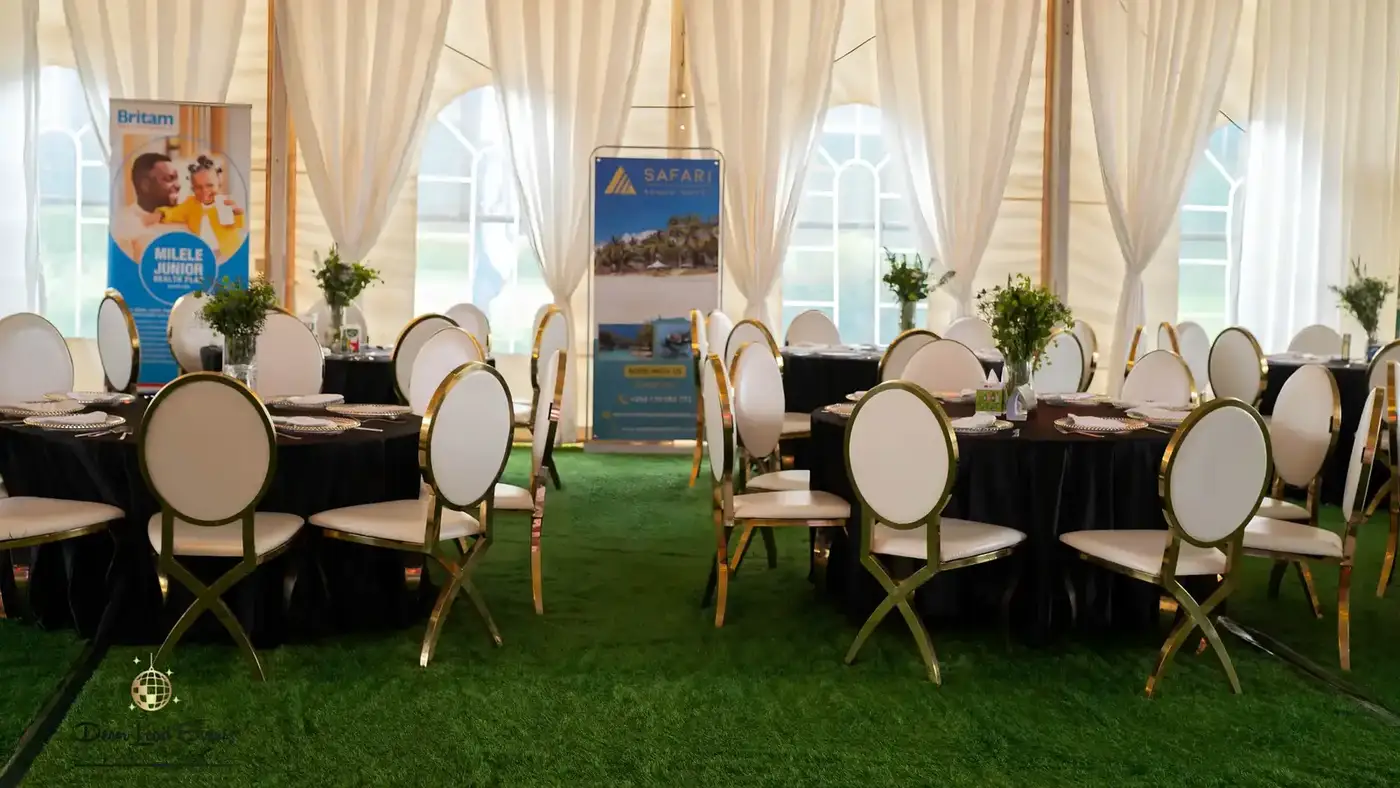
A wedding venue is not only a pretty backdrop. It decides your budget, your vendor options, your noise limits, your rain
plan, and how smooth the day feels.
This guide is written for Kenya weddings in 2026. It is focused on the details that prevent last minute stress, like power,
toilets, curfew rules, and hidden fees.
Quick checklist (the 10 minute version)
- Lock your guest count range and your full budget ceiling.
- Choose your venue model: hotel package or garden dry hire.
- Ask about curfew rules and noise permit responsibility.
- Ask what is included (chairs, tables, cutlery, power backup, staff).
- List hidden fees (corkage, outside vendor charges, overtime).
- Check your rain plan and your sunset timing for photos.
- Do a site visit with your key vendors.
- Confirm access, parking, security, and guest comfort.
- Put every promise into the contract.
- Score your top 3 venues with a simple matrix.
1. Start with the real numbers
Before you tour venues, decide these two numbers. They affect every quote you will get.
- Guest count: pick a range, not a single number (example: 90 to 110).
- Total budget ceiling: the highest amount you can spend without borrowing.
Many couples are choosing smaller guest counts in 2026 (around 50 to 100 guests). This often improves guest experience
because it frees budget for better food, decor, and logistics.
If you want a fast starting point, use the event budget calculator to see a
draft breakdown before you negotiate with venues.
2. Pick the right venue model: hotel package vs garden dry hire
Most Kenya wedding venues fall into two models. Each one has a different cost shape and risk profile.
Model A: Hotel and resort packages
- How it works: you pay per person for food and beverage, venue hire is often bundled.
- Best for: couples who want lower logistics stress and predictable operations.
- Watch outs: corkage fees, strict vendor rules, limited menu flexibility.
Model B: Garden and private land (dry hire)
- How it works: you pay a flat venue fee, then hire tents, catering, power, toilets, and staff separately.
- Best for: couples who want control over food and drink and full styling freedom.
- Watch outs: power failure risk, rain risk, more coordination work, more permits on you.
Reality check: a garden is not always cheaper
The biggest myth is that a garden wedding is automatically a budget choice. Food can be cheaper with outside catering, but
tents, flooring, toilets, generator, and staff can quickly close the gap.
| Cost category | Hotel package (200 guests) | Garden dry hire (200 guests) |
|---|---|---|
| Venue hire | Often included | KES 100,000 (example) |
| Food | KES 4,500 per guest (example) | KES 2,000 per guest (example) |
| Tents and furniture | Included | KES 180,000 (example) |
| Power backup | Usually included | KES 30,000 to 50,000 (silent generator) |
| Toilets and sanitation | Included | KES 30,000+ (if extra units needed) |
| Noise permit | Often covered by venue | KES 10,000 to 20,000 (location dependent) |
Use this comparison to choose based on control and stress, not on assumptions. Always ask for a written quote that lists
what is included.
3. Hidden costs that trap budgets
Ask about these fees early. They can add 15 to 20 percent to your total if you find them late.
- Corkage: hotels may charge per bottle for outside alcohol.
- Outside vendor charges: some venues charge a fee for vendors not on their list.
- Generator fuel and transport: confirm if the quote includes fuel and delivery.
- Vendor travel: destination weddings add transport and accommodation for Nairobi vendors.
- Overtime: extra hours can mean staff charges and extra permit risk.
4. Permits and compliance (do not skip this)
Rules vary by county and zone, and they can change. Confirm requirements for your venue and date. Put the responsibility in
writing.
-
Noise permits: residential areas are higher risk for complaints. If police arrive, they will ask for your
permit. - Event permits: some counties require temporary event levies, especially for outdoor sites.
- Music licensing: DJs are often asked for MCSK, KAMP, and PRISK proof. Confirm who provides it.
If you are planning in Nairobi, read our guide on noise permits in Nairobi and the guide
on event permits in Kenya.
5. Weather and season strategy
Outdoor venues need a rain plan. Do not accept “we will figure it out” as a plan.
- March to May: long rains. Indoor plans are safer.
- August to September: peak season in many regions. Book early and expect higher rates.
- October to December: short rains. Use waterproof structures and plan for late afternoon showers.
Kenya sunsets are early. Plan portraits for late afternoon and avoid ceremony start times that push photos into darkness.
6. Site visit checklist (ask these on the ground)
Power
- Is there a backup generator on site?
- Is switchover automatic or manual?
- Where are the power points for DJ, lights, and catering warmers?
Toilets and water
- How many toilet stalls are available for guests?
- Is there running water for caterers and hygiene?
- Do you need executive mobile toilets for your guest count?
Access and comfort
- Can a normal car enter if it rains?
- Is the ground friendly for heels or will you need flooring?
- Is it accessible for elderly guests and wheelchair users?
Noise and acoustics
- Have there been noise complaints in the last 6 months?
- Is there nearby road noise that will affect vows and speeches?
7. Venue picks by region (how to think about each area)
Use region to narrow the list before you start calling venues.
- Nairobi: convenience and strong vendor access. Watch traffic and residential noise limits.
- Naivasha: destination feel. Budget for transport and accommodation for guests and vendors.
- Diani and the coast: resort packages work well for 50 to 150 guests. Watch wind and humidity.
- Mt Kenya and Laikipia: cool nights and strong scenery. Budget for heaters and lighting.
8. A simple venue scoring matrix
Score your top 3 venues from 0 to 5, then multiply by weight. This keeps decisions objective when photos look equally good.
| Criteria | Weight |
|---|---|
| Total cost (hire + food + extras) | 30% |
| Rain plan and weather protection | 15% |
| Guest convenience (distance, parking) | 15% |
| Inclusions (chairs, tables, power) | 15% |
| Vendor freedom (outside catering, decor) | 10% |
| Aesthetics and vibe | 10% |
| Noise and permit risk | 5% |
9. Common venue searches that help you find better options
If you are researching online, long tail searches often reveal price lists and rules that generic directories skip.
- Garden wedding venues Nairobi prices 2026
- NEMA noise permit for weddings Kenya
- Small intimate wedding venues Naivasha
- Affordable wedding packages Kenya 2026
10. Next step
Shortlist three venues, then do one site visit with your planner, decorator, and DJ. You will catch most issues on the
ground in 30 minutes.
If you want help comparing venues and planning logistics, talk to our team.